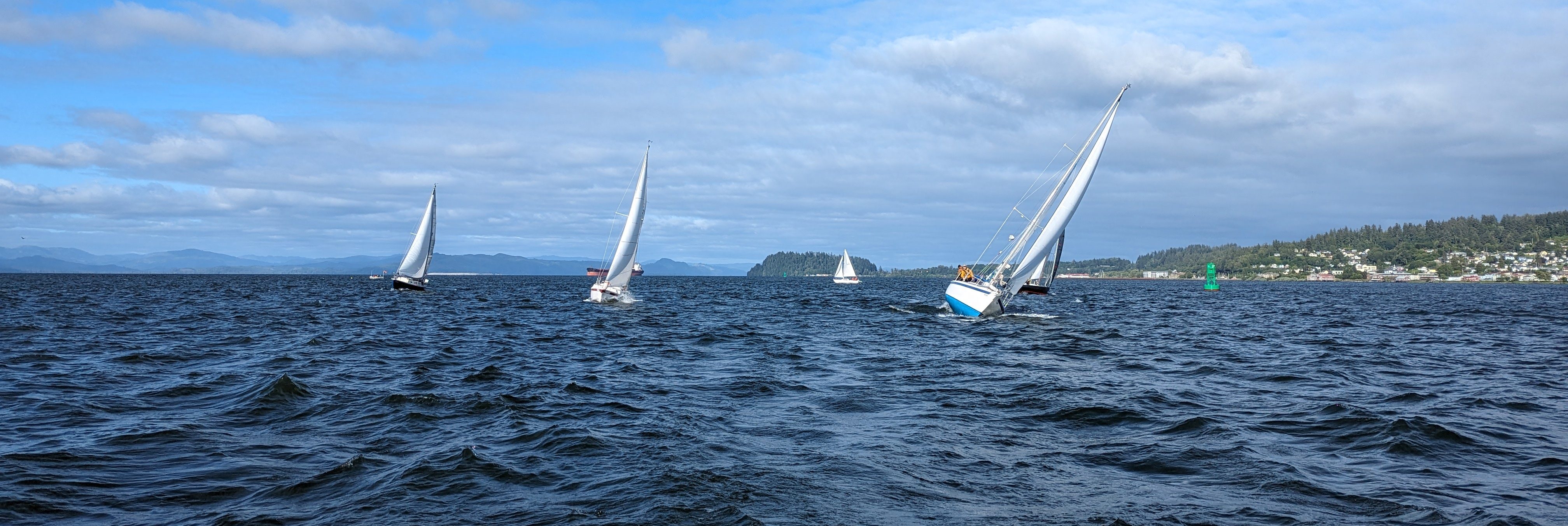
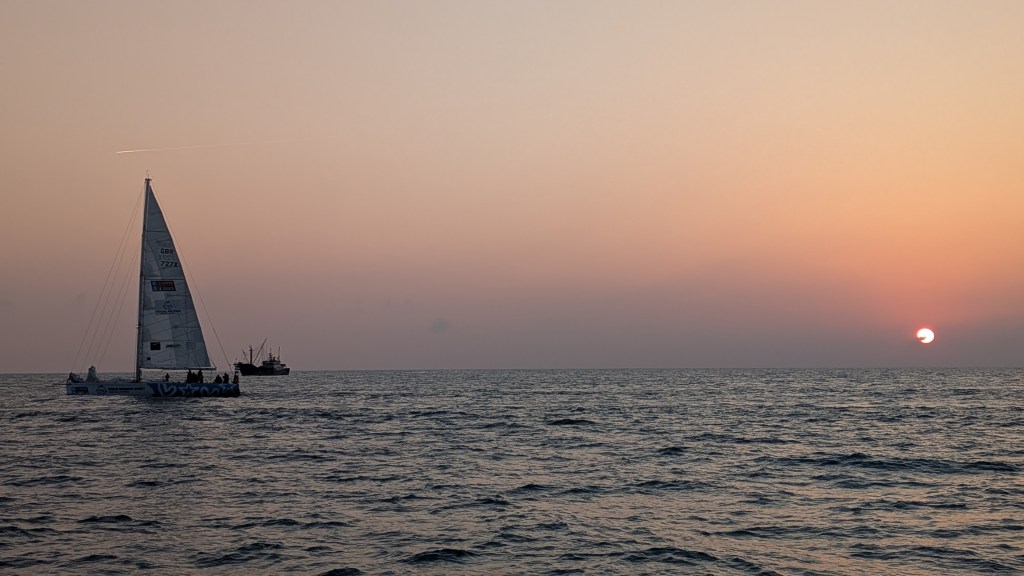
Hi everyone! This update is coming from Tongyeong, South Korea – race stop #8. Only five more stops to go! I’ve spent the first quarter of 2026 racing up through Asia with stopovers in Subic Bay, Philippines; Qingdao, China; and Tongyeong.
ICYMI: Due to a unique situation and opportunity, I have transferred to Team Scotland and am loving it. Team Scotland is skippered by Heather Thomas, the award-winning skipper of Maiden which won the 2023-2024 Ocean Globe Race (O°G°R°) with an all-female crew using only celestial navigation.
Leg 5 – Stage 6: Airlie Beach, Australia to Subic Bay, Philippines
This was a 4,250nm adventure north past Papua New Guinea and riddled with wind holes. Our team, along with Team Qingdao and Team UNICEF, stuck close to the rhumb line and it did not pay off. We hit wind hole after wind hole after wind hole. We finished 8th that race, edging out Qingdao and UNICEF in the last few hours of the 24-day race.
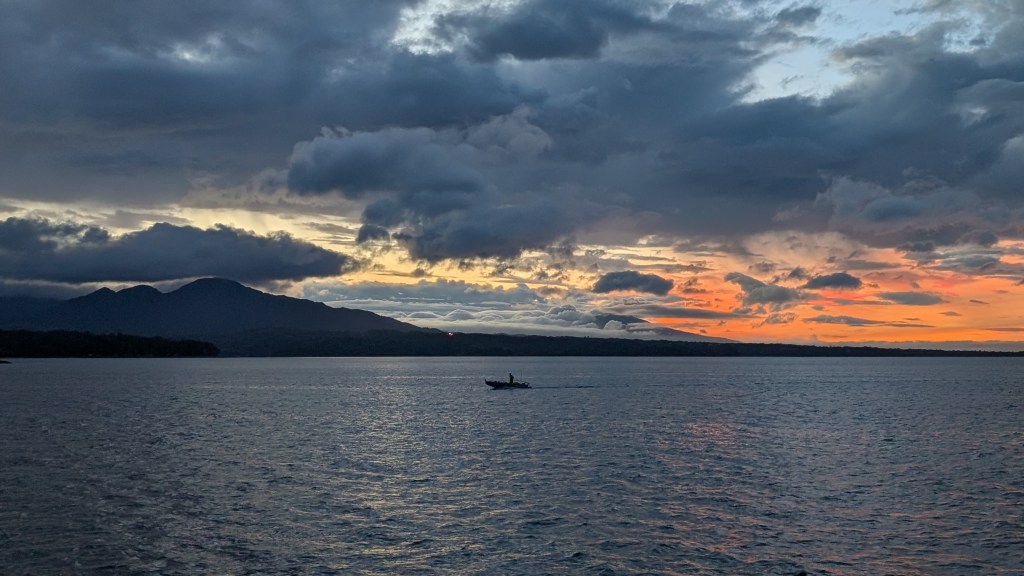
The last 24 hours of this race was riddled Filipino fishing vessels, most of which were small, hand-crafted vessels close to the water and difficult to spot. At night, they would be lit up with various colored lights – not traditional navigation lights. We had a “Lookout” positioned at the shrouds day and night.
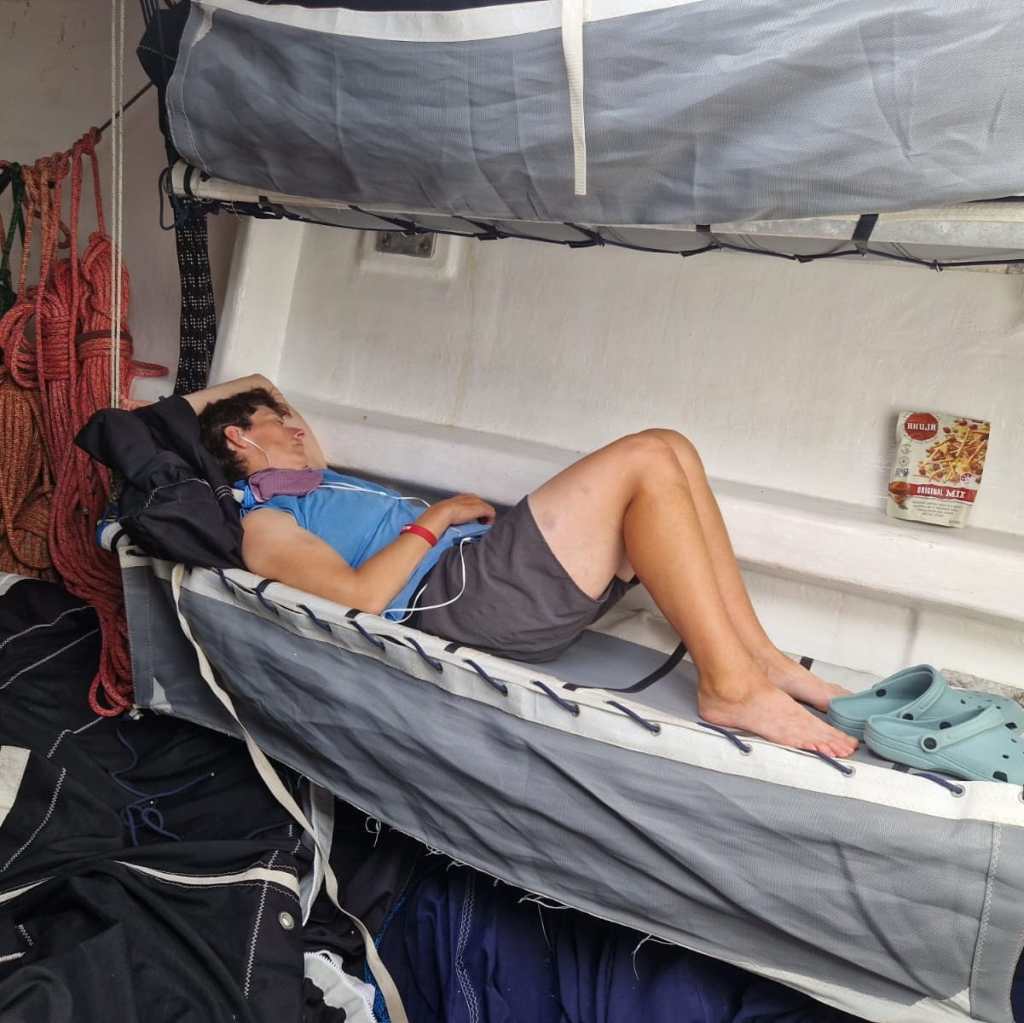
This was a very HOT race – temps were high and winds were low. Squalls came and went and the heat returned. Below deck, there was very little air movement. We lived in our lightest-weight shorts and sports bras. I got a heat rash that covered nearly my whole back, and particularly my kidneys. When it flared up (when overly hot or actively sweating), it felt like thousands of tiny paper cuts stinging at the same time. I was quite miserable for nearly the whole leg. I slept in the sail locker frequently when I would awake in my bunk drenched in my own sweat.
Leg 5 – Stage 7: Subic Bay to Qingdao, China
This was a 1,500nm journey through the Bashi Channel (aptly named as it was bashy, upwind sailing) and past multiple Japanese islands to the east of Taiwan. This is where we started to encounter the Japanese fishing fleet. Their vessels were commonly uniform in shape, size, and nav light structure. They would set long nets in the water with two large floats / buoys with flags marking the beginning and end of the net. The buoys were on AIS which made it a bit more easy to spot.
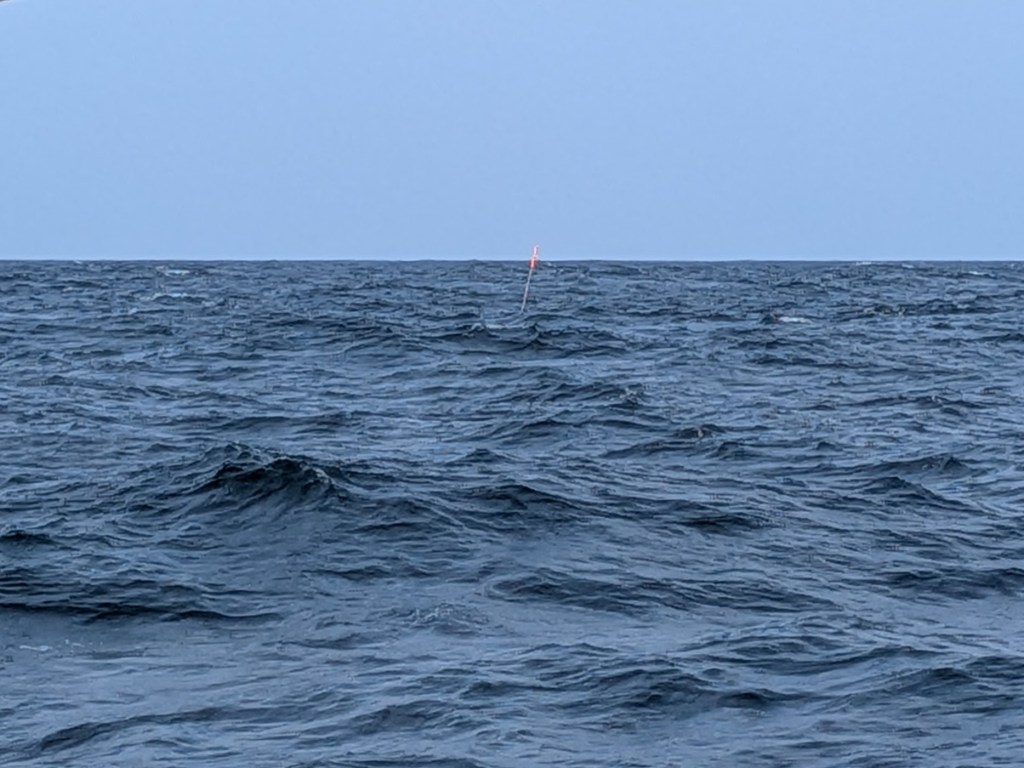
This is also where we first started to encounter random, singular buoys in the middle of the ocean. So, we, again, employed our lookout system – day and night. When we encountered heavy buoy and boat traffic, our helm would wear one of the Sena headsets and the lookout at the bow would wear the other so they could communicate without yelling.
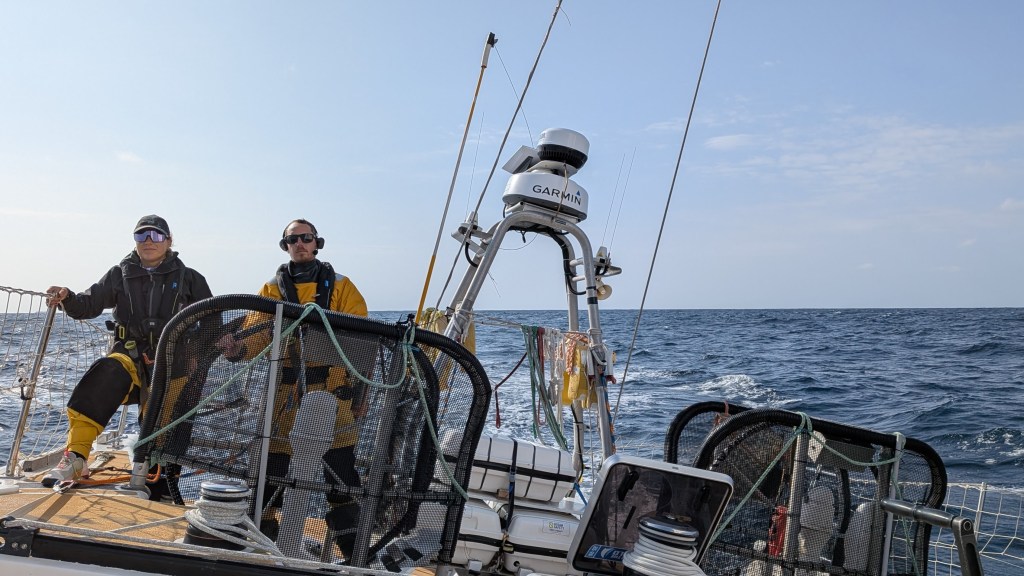
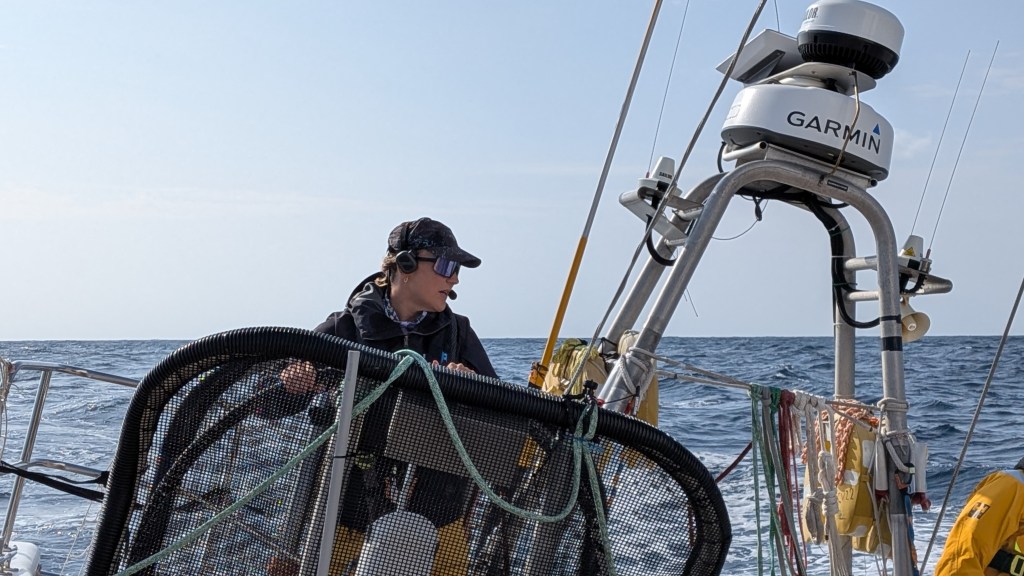
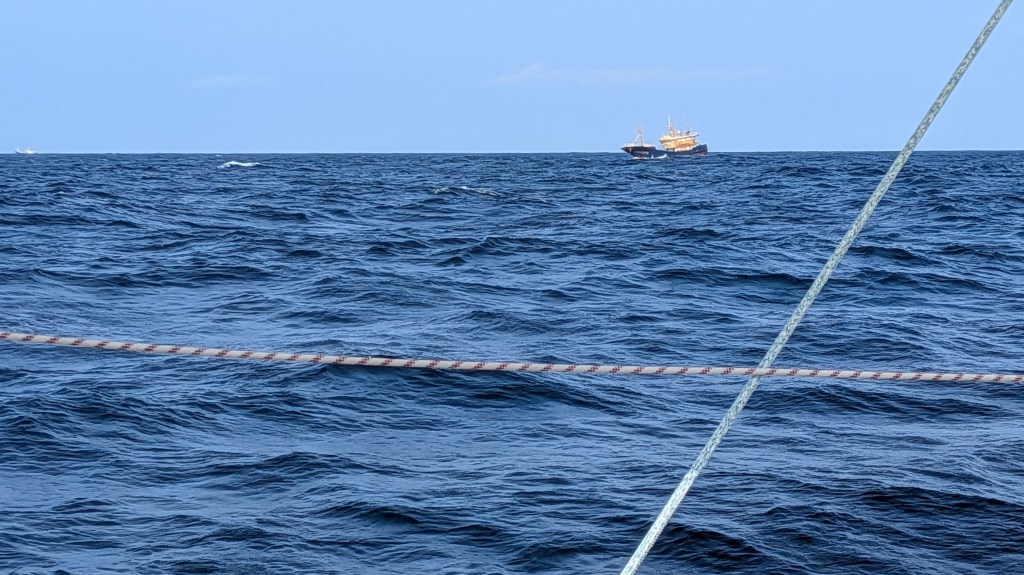
As we approached mainland China, we began to encounter the Chinese commercial fishing fleet as well as the local fishing fleet. The local fleet (smaller boats, very low to the water and basic in nature) were dropping buoys as well as setting nets with large floats. After the race finished and we were motoring in to Qingdao, Team GOSH tried to navigate between two large floats and caught one of the nets. We stood by to assist with untangling them.
We decided to play our Joker during this race race (a one-time opportunity to double your race placement points) and it certainly paid off with our 2nd place finish! We earned 18 points plus and additional 3 for reaching the scoring gate first. The 2nd place finish for this stage shot us into 2nd place overall for the entire Race.
Leg 6 – Stage 8: Qingdao, China to Tongyeong, South Korea
This was barely a race at all, unfortunately. Riddled with wind holes and restricted by a “must be in port by” date (sailors know it’s near impossible to sail to a schedule, but Tongyeong had a welcome ceremony scheduled for March 17 at 5pm!), we started and stopped the race three times. We motored a significant distance before starting the race a third time and sailed for approximately 30 hours for a shortened, but complete race. The last five hours of the race were the most action-packed hours of racing across the fleet the entire Race thus far. Team Seattle was in the lead, but hit a fishing net which slowed them down to 8kts for a long while until it released iteself. That allowed teams Tongyeong, UNICEF, and Qingdao to overtake and finish the race in that order. We also overtook Team Seattle in the last hour of the race to claim fourth place . . . by a mere 0.018 nautical miles. . . or, about two boat lengths!!
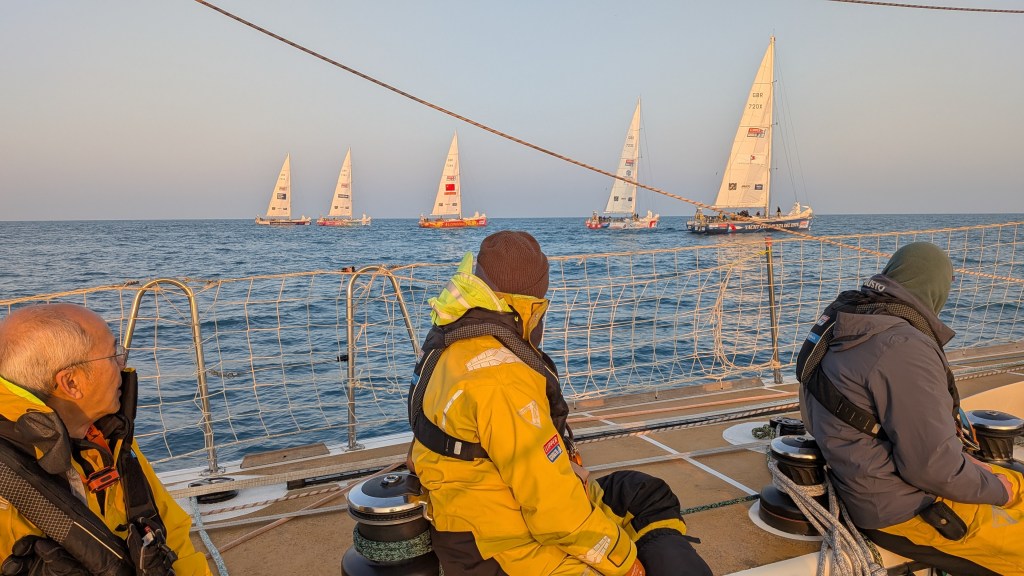
Our boat also had a very close encounter with a squid fisherman in the black of night. I was at the helm with the skipper by my side the whole time. We held our course while it changed course and we passed in front of it within 150 meters. They shined green laser pointers on our sails to get our attention. I remained focused on my course, so much so that I kept repeating to myself out loud, “Don’t look left. Just look ahead. Don’t look left. Stay focused.” Jon, my Check Helm, had a front seat to a very intense passing.
In the end, I feel much of the racing throughout Asia has had a component of luck because any one of us could have snagged a net or buoy during the nighttime hours of racing altering our performance.
Sailing through Asia has been a unique experience. The island scenery has been beautiful. The trash / pollution heading towards China was disheartening. The one-of-a-kind reception into Qingdao, China was vibrant and energizing. Being the first fleet to be hosted by the city of Tongyeong has been a lovely experience. Tongyeong even put on a music, food, and cultural arts festival for us!
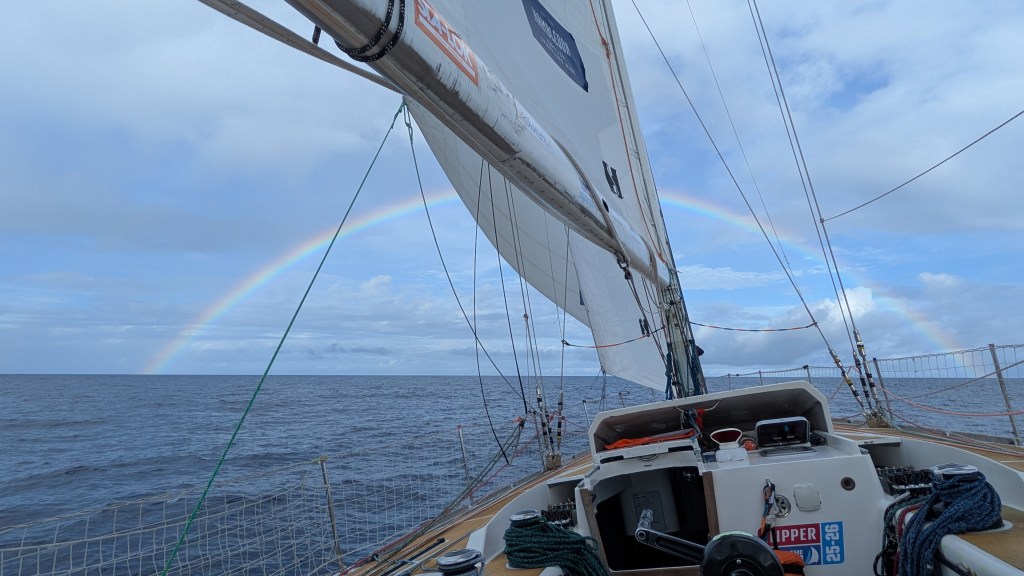
Now it’s time to gear up and tackle the Mighty North Pacific . . . in the direction few sailors every traverse it, from west to east. 5,200nm of some possibly some of the biggest water and weather we’ll see this entire race. Here is a peek at our route:
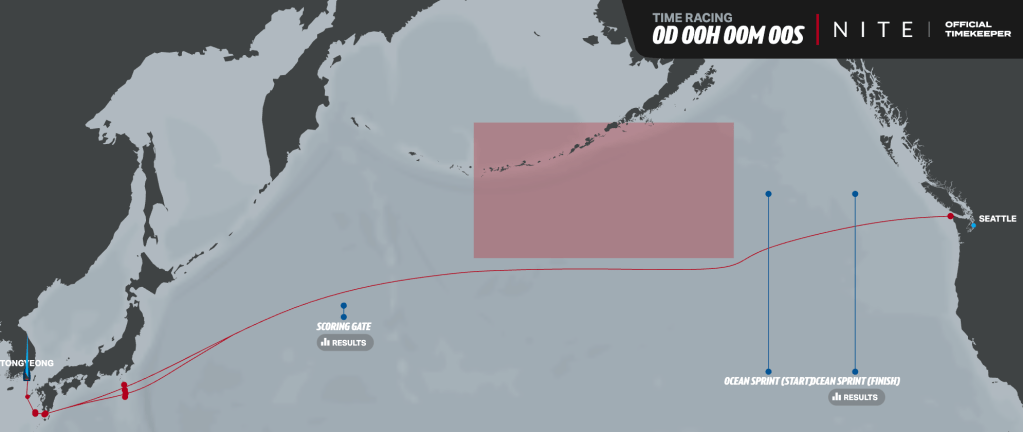
Stay tuned for some more posts once I land in Seattle. It’s a longer stopover so I hope to have more time. I will be sharing some stopover highlights from Subic Bay, Qingdao, and Tongyeong.


 Windward Leader
Leave a reply to tenderlyrad57e6e24c1f Cancel reply