“Finally!” I exasperated [to myself] after posting the “By the Numbers” catch up post. Finally . . . I had a little bit of time to aggregate mileage and think about some highlights, lowlights and all the lights in between. Finally. . . I get a chance to bring you into this with me.
Coming into this adventure, I knew this was going to be the most difficult “job” I will ever have. I knew it was going to test me physically, mentally, emotionally, and in ways I couldn’t yet fathom. Well, I’m here to tell you that this race has lived up to those expectations – and then some. “The highs are high and the lows are . . . WEIRD.” is a phrase I adopted along the way. Let’s dive in.
The Good
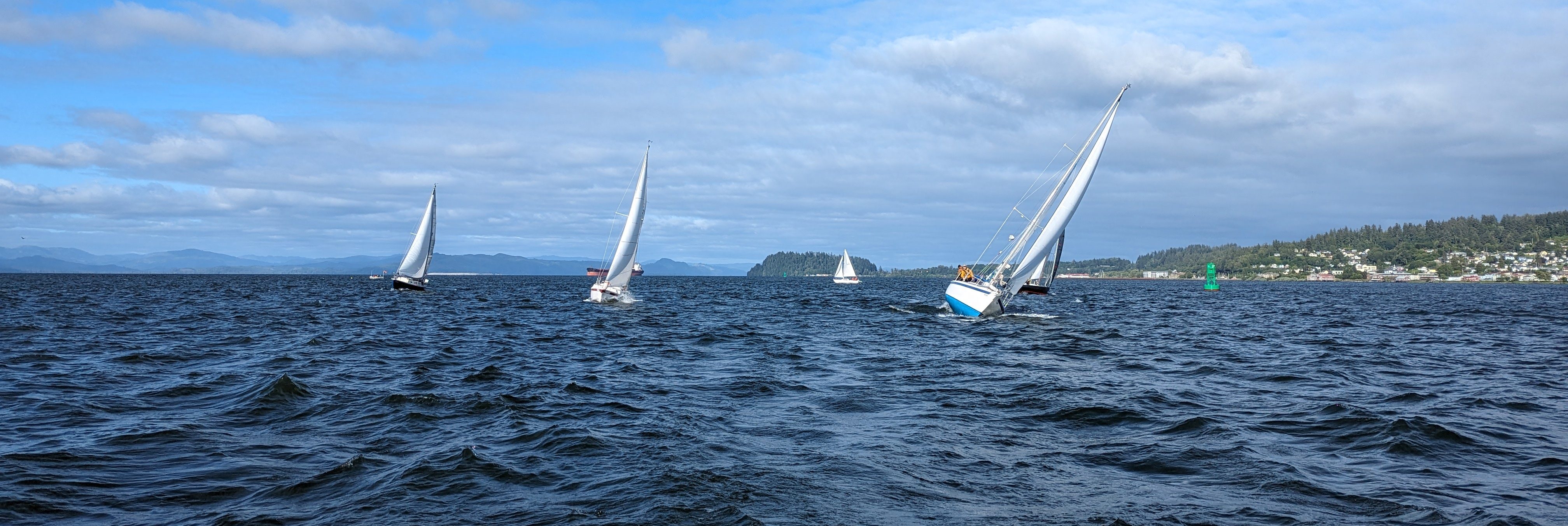
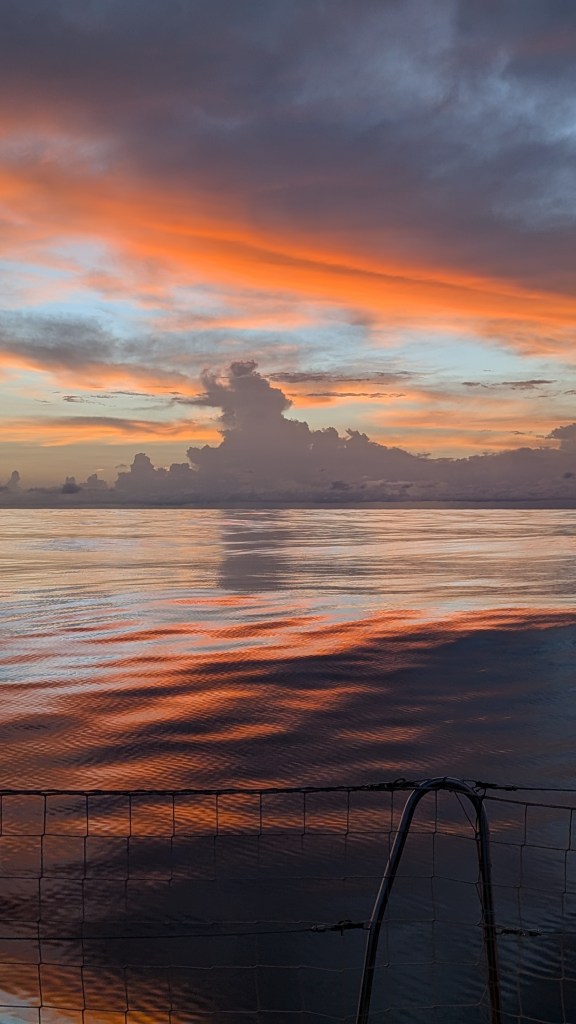
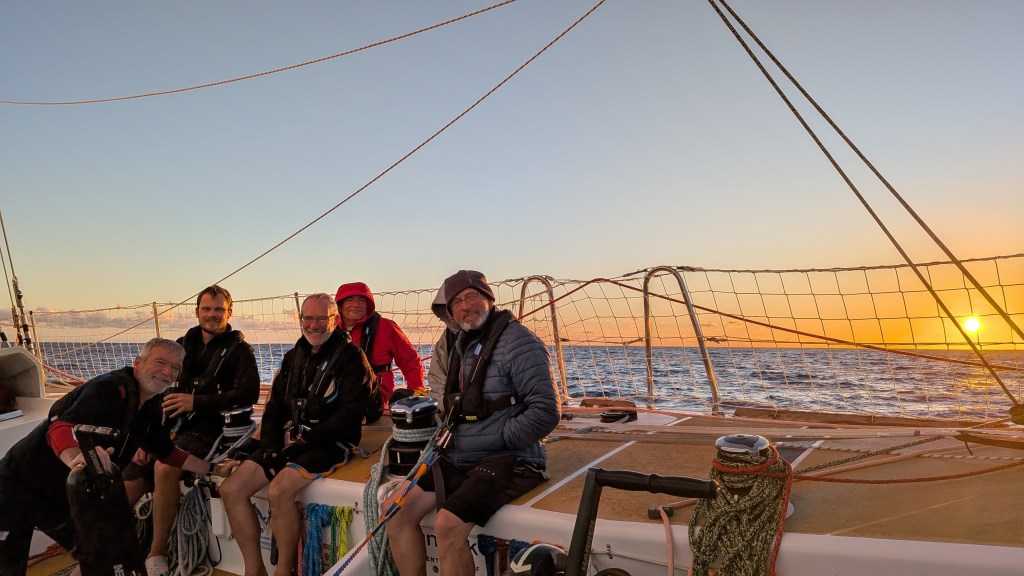
The sailing is phenomenal. I grow as a sailor every time I’m on deck – and we grow as a performant sailing team. Sometimes growth means failing and learning from the failures. It’s not all sunshine and rainbows – although the sunrises, sunsets, and rainbows following squalls are quite beautiful. Moonrises, moonsets, sailing by the stars and moon, and seeing Starlink zip across the night’s sky are all amazing, too. Sometimes growth has meant being given autonomy by the skipper and mate to perform a series of tasks on deck without their immediate supervision or oversight (but do not worry, they are just below deck ready if something happens).
It is not uncommon for us to sail in 30- and 40-knot winds, we’ve learned. The first time that happened was on Day 2 or Day 3 of Race #1 as we crossed the Bay of Biscay. Because we faced such extreme conditions so early in the race, it hardened us for subsequent similar conditions. What phased us then, doesn’t necessarily phase us now and that’s a great thing.
Multiple times we have been racing for thousands of miles without seeing another boat, whether it be a commercial vessel or another Clipper yacht. Then, near the end of the race (maybe within 100 miles of the finish line), we have found ourselves battling another Clipper yacht the very last day of the race. Sometimes we are within a mile of the other vessel and sometimes we are only a couple hundred yards or meters apart. For instance, after traveling from Spain to Uruguay – nearly 5000 miles – we crossed the finish line in front of another team by a mere 3 minutes!
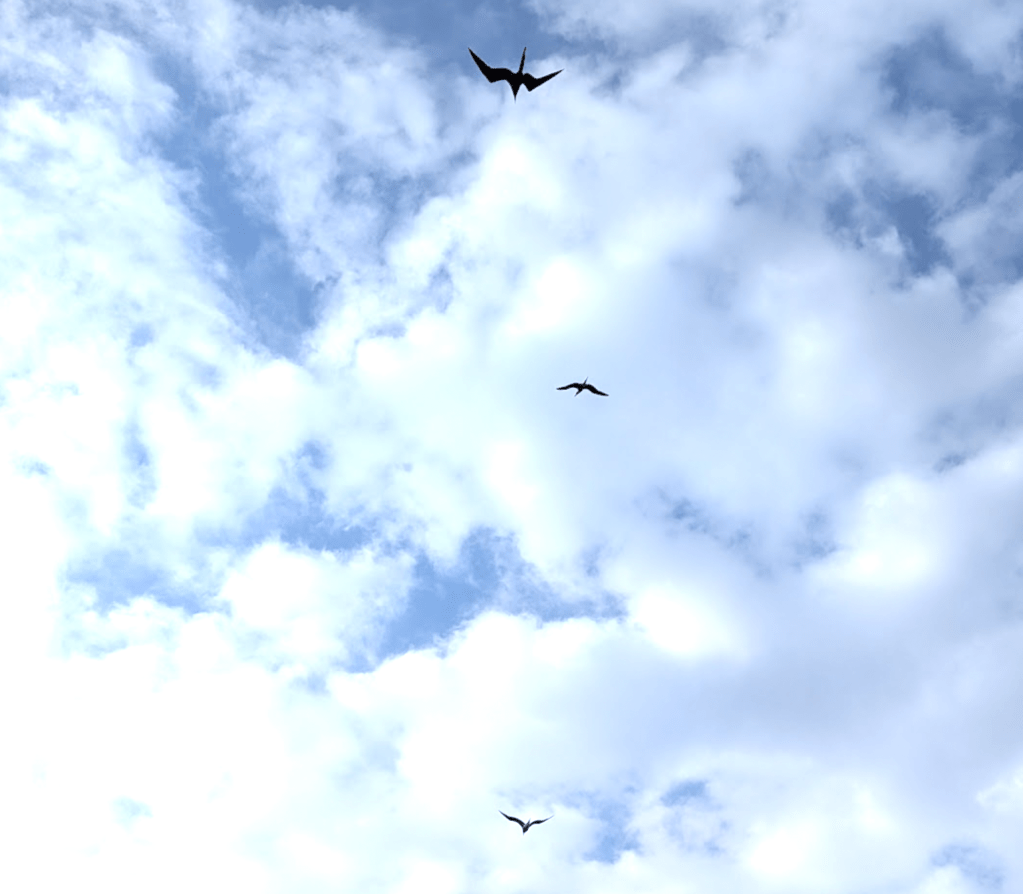
The wildlife / marine life is sparse when on the long ocean crossings. But when we do come across interesting birds such as albatrosses or whales or dolphins, it is an absolute delight. One morning, three Great Frigate birds began following the boat and soared just above my head while I was on helm. They’re one of my favorite seabirds (next to the white pelican), so this was a real treat! We’ve also had multiple types of birds land on deck and on our rigging. Thankfully the one that landed on our windex at the top of the mast, didn’t break the instrument!
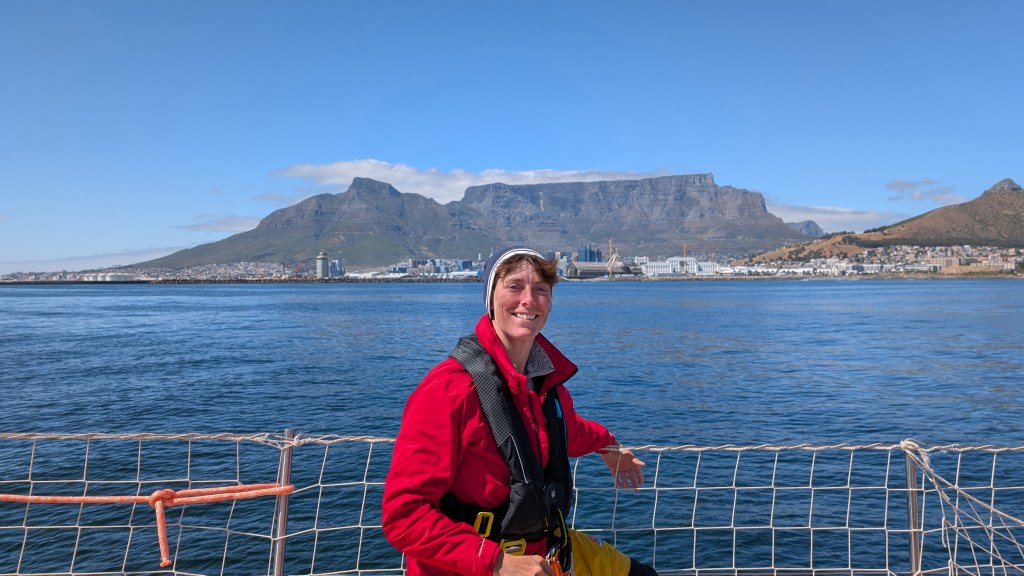
The stopover ports have been beautiful: Puerto Sherry, Spain; Punta del Este, Uruguay; Cape Town, South Africa; Fremantle, Australia; and Airlie Beach, Australia. I think that Cape Town so far is my favorite overall because of the amazing food, wine and natural scenery and incredibly cheap prices. Next up we have the Asia trio of Subic Bay, Philippines; Qingdao, China; and Tongyeong, South Korea!
The Bad
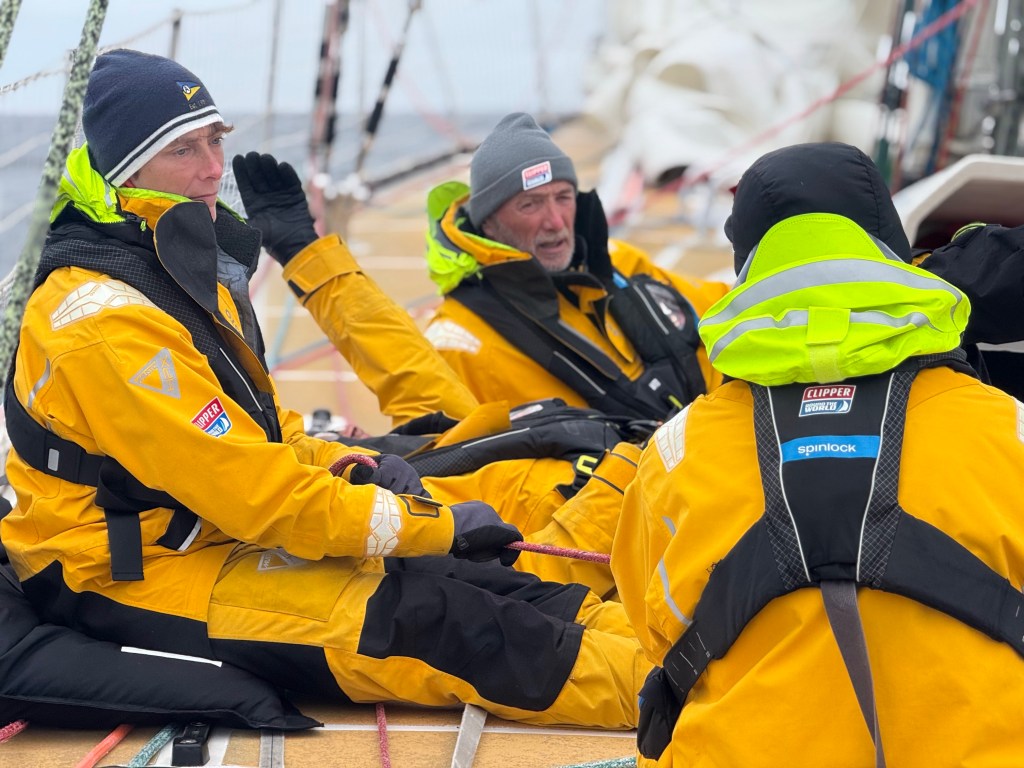
What training doesn’t necessarily prepare us for is living onboard the yacht with 20 other people for more than 20 days. In training, the most we ever spend on the boat is about 5 days and it’s in a fairly controlled environment. Fast forward to race life and that environment is more extreme . . . longer time at sea, the boat pitched at a 40- to 45-degree heel, extreme hot or extreme cold conditions, wet gear and wet bodies for days on end.
Living, days on end, at 40 or 45 degrees (called a “heel”) is incredibly strenuous. Walking from one area to another on the yacht is difficult at best and treacherous if the floors are slick with water or possibly a cooking oil spill from the galley or a spray cleaner spill because someone knocked the top off the bottle unbeknownst to them. Using the bathroom (called a “head”) in these conditions is a lot of work as well. Getting [un]dressed with one hand while the other hand holds you in place is not a skill one is born with. Cooking on the heel is very difficult and time consuming to prepare – most team members start cooking 2-2.5 hours in advance of when the meal is to be served. Your chopped vegetables roll away and on to the floor, your meal in the stock pot may slosh around and spill, and so on.
I’m not sure what it is about how I move around on the yacht, but my elbows are constantly bruised. I seem to bang them on everything, all the time.
Because our team changes a little bit at each stopover (this is because folks can sign up to compete in one leg of the race, multiple legs, or all the legs), it is common that every leg has a different personality overall. There have been some legs where the collective vibe on the boat really jived with me and others that didn’t. When it doesn’t, it makes for an emotionally draining experience because it takes additional mental work and awareness to get through each day with minimal frustrations or other discomforting feelings. It’s not ill will towards any individual, it’s more that an individual or set of individuals can behave in a way that is annoying or aggravating.
The Ugly
No one ever said racing a sailboat around the world is safe. No one. Ever. However, what doesn’t get ingrained into you until you’re actually on the boat during a race is just how easy it is to suffer a catastrophic injury. During Leg 1 and the storm on the Bay of Biscay, my teammate – and watch leader, suffered a terrible fall from the high side of the stern to the low side (behind the helm cage). As a result of the fall, he fractured his skull and scapula. He had to be medevac’d off the sailboat by the French Coast Guard in order to receive proper medical treatment.
I was the first to respond to my teammate’s fall – I was the nearest crew in the cockpit that could come to his aid (the closest others were on the helm). He was unresponsive and I honestly thought for a moment that he had died after hitting his head. I immediately called down for assistance while I tried to adjust his limp body so that waves didn’t keep washing over his agape mouth. He came to and expelled the sea water he had ingested. We then got the body board and moved him from the stern to below deck where he could be assessed. The effort to move his immobilized body took nearly the entire crew. These are images I cannot unsee and can recall vividly nearly 5 months later. Because of his injury, I wear a helmet on deck when the winds are above 30 knots sustained. I’ve had folks ask me about the helmet and I tell them the story above. Thankfully not one person has made fun of me for it.

During Leg 3, a teammate suffered a race-ending knee injury by simply readjusting their body from one standing position to another and slipping in the process. While managing the spinnaker during Leg 1, I slightly tore a ligament in my left shoulder and needed to go on light duty for a couple weeks so it could heal. Back injuries, bruised ribs, bursitis, infections, and countless other maladies occur during any given race. It is a test of health, endurance, ability to heal, and overall a test of your prevention skills. I am ever mindful when on deck, but it doesn’t take much to become distracted and forget the importance of “one hand for you, one hand for the boat.” It is what we and our loved ones fear the most, but we don’t let it stop us from living this dream.
But, in the end. . .
It’s all worth it. The Bad and The Ugly do not outweigh The Good. Good prevails. We bind together to fight The Bad and The Ugly – we watch out for one another, we address conflict in near real time, we care for one another when one is ill. This shared dream keeps us moving forward.


 Windward Leader
Leave a comment