Hello fellow AYC members! I am excited to share my Clipper Race experience with you! This month, I’ll talk about the four levels of training required for race participants – including what’s covered in training, the boats we train on, where training is located, and what my experience has been like so far. Let’s go!
First and foremost, the Clipper Race company is all about safety and good seamanship. During its 30-year existence, their training and safety curriculum has evolved, based upon prior race experiences. I love this because it shows the race company is committed to ensuring safety best practices, race after race.
Because of their focus on safety and seamanship, every sailor – regardless of
experience – must successfully complete all four levels of training prior to beginning the race. Clipper Race welcomes sailors of all levels, including folks who have never sailed before, so it is important that everyone receives the same baseline training. Training is delivered by paid and vetted skipper and first mates employed by Clipper Race. Some have raced previously, and some are working towards becoming race leaders. As you can imagine, each level of training builds upon the last. Here’s a brief breakdown of each level:
Training Level 1: the basics of sailing (points of sail, points of the boat, lines on the boat), boating safety, seamanship, differences between upwind and downwind sailing, daily engineering checks, and, surprisingly, learning how to cook for large crews!

Training Level 2 (two-part course): Part 1a Royal Yachting Association (RYA) certified Sea Survival course; Part 2 – working in a watch system and spending multiple days at sea in that system, basic chart work, and learning the electronics.
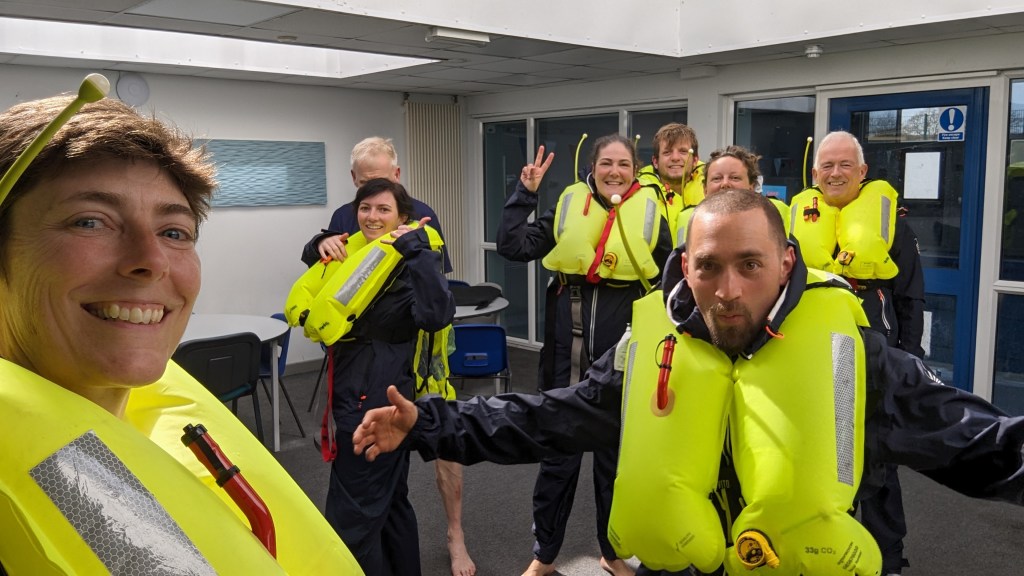
Training Level 3: introduces the spinnaker and more downwind sailing practice,
including man overboard (MOB) drills.
Training Level 4: this training takes place only after Racer Allocation in May 2025 and is with my assigned team, on my assigned boat, with my assigned skipper and first mate (aka AQP – Additional Qualified Person); the training focuses on team building, practice races, and getting to know the boat I’ll be living on for 11 months!
Training Level 1 felt like the first day at a new school, but where all the kids were brand new to the school. Nerves were high, but so was the positive energy. I have made lasting friendships because of this shared experience. I am still friends with many folks from my trainings and talk to them regularly – they live all over the world and we use WhatsApp to stay connected.
Learning to cook for folks from all different cultures is a very interesting experience. I learned that folks in the UK call a particular concentrated juice “Squash” and it was really confusing why someone was asking for “squash” during breakfast…until someone explained it to me!
Training is both physically and mentally exhausting. We’re on the water for at least 8 hours per day and there is – because we are all new at this – at least one hour of preparations to set sail and at least one hour of packing the boat up when we’re done for the day. The days are long, but so fulfilling. We end each day with good, hearty meals and discussions of what we learned during the day … and always laughter and smiles.

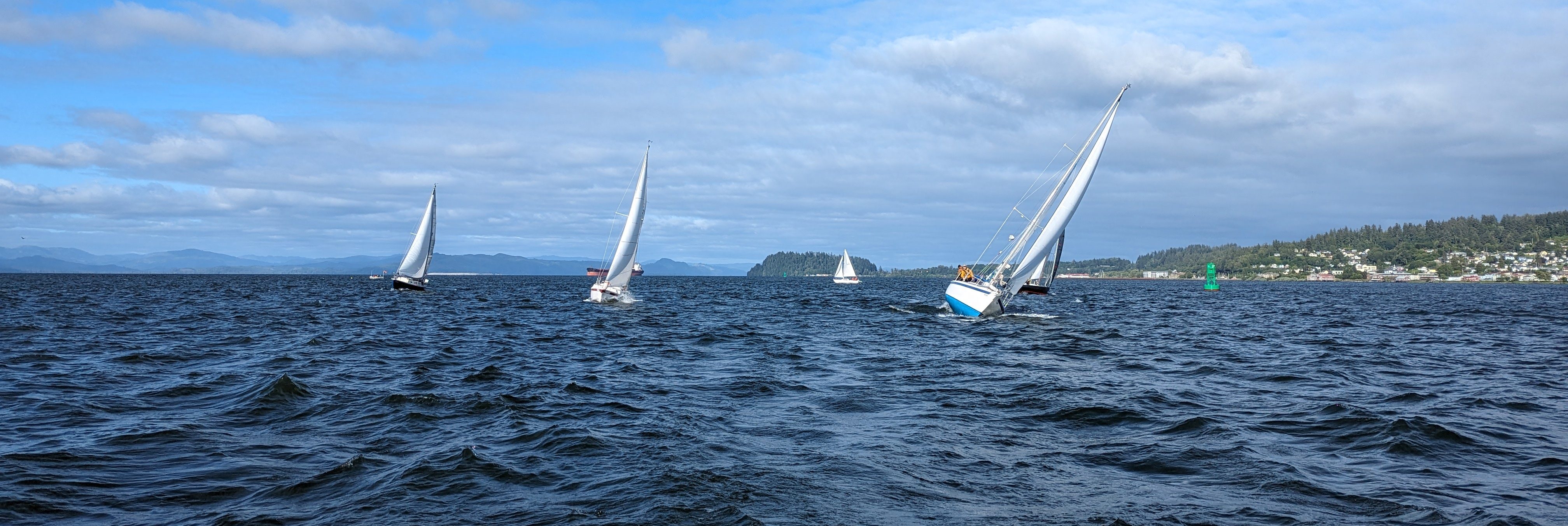
On the 68-foot training yachts (the former racing fleet), everything is bigger than what we sail here at home! Everything carries more power and, therefore, more risk. Basics such as the proper way to hold your hands to the winch (pinkies first, not thumbs), how many times to wrap the large winches before loading the self-tailer, and how lines are stored (they call it “tidying up”) was all different and new.
In addition to sea survival training, we practice MOB drills daily during every level of training. We have learned the difference between a tethered and untethered MOB and, further, the difference between a MOB on a short tether versus a long tether. Every crew member is encouraged and made to practice MOBs from a different position on the boat each time so that they know what role to play when an incident occurs. It’s a great way to ensure everyone knows their role in the time of crisis.
I have completed training levels 1 through 3 as of now. The spinnaker training was by far the most complex as it had us put together everything we have learned thus far. The training skippers and first mates are very good – most of the training skippers have at least their RYA Coastal Yachtsman certification. Their experience is vast and they love sharing it.
In my next installment, I’ll share more about the people component of the race and the different roles on the boat! I’ll talk about what it’s like to work with people you’ve never met before, working with so many different personalities and cultures, and the bonds formed in doing so. Cheers!
 Windward Leader
Leave a comment